The short answer: a high protein diet is one where you eat noticeably more protein than the standard recommendation — typically 25%–35% of your daily calories, or about 1.2–2.0 grams of protein per kilogram of body weight. For most adults, that lands somewhere in the range of 100–160 grams of protein per day.
This is the hub article for our high-protein cluster — start here for the definition, then dig into how many grams that actually works out to for you, a full 7-day high protein meal plan to see what it looks like on the plate, and whether this actually helps with weight loss.
The Standard Definition
The official reference range (called the Acceptable Macronutrient Distribution Range, or AMDR) says adults should get 10%–35% of daily calories from protein. The old "standard" intake most people target sits near the bottom of that range — around 10%–15%.
A high protein diet lives in the upper half of that range: roughly 25%–35% of daily calories. So if you're eating 2,000 kcal a day, that's about 125–175g of protein — a meaningful jump from the 50–75g most adults eat by default.
Grams Per Kilogram Is the More Useful Measure
Percent-of-calories is a rough starting point, but grams per kilogram of bodyweight is what most nutrition research actually uses:
- 0.8 g/kg — RDA (bare minimum to prevent deficiency).
- 1.0–1.2 g/kg — "normal" intake for most active adults.
- 1.2–1.6 g/kg — entry-level high protein; supports general activity and muscle maintenance.
- 1.6–2.0 g/kg — solid high protein; the sweet spot for people losing fat in a calorie deficit or building muscle.
- 2.0–2.4 g/kg — very high; used mainly by athletes in aggressive cutting phases.
For a full breakdown by body weight, see how many grams of protein is a high protein diet.
What "High Protein" Doesn't Mean
- It's not automatically low carb. You can eat high protein alongside plenty of rice, oats, potatoes, and fruit. Carbs are a separate axis.
- It's not just meat. Greek yogurt, cottage cheese, eggs, tofu, tempeh, lentils, edamame, and protein powder all count.
- It's not "as much as possible." Past ~2.0–2.2 g/kg, additional protein doesn't add measurable benefit for most people.
Who a High Protein Diet Is For
- Anyone trying to lose fat while keeping muscle — protein is the single most effective macronutrient for controlling hunger in a deficit.
- Anyone doing regular strength training — more protein means better recovery and more consistent muscle-building signal.
- Older adults — protein needs go up with age to protect against muscle loss (sarcopenia).
- Anyone who feels hungry all the time on their current diet — protein is the most satiating macronutrient per calorie.
What It Looks Like on a Plate
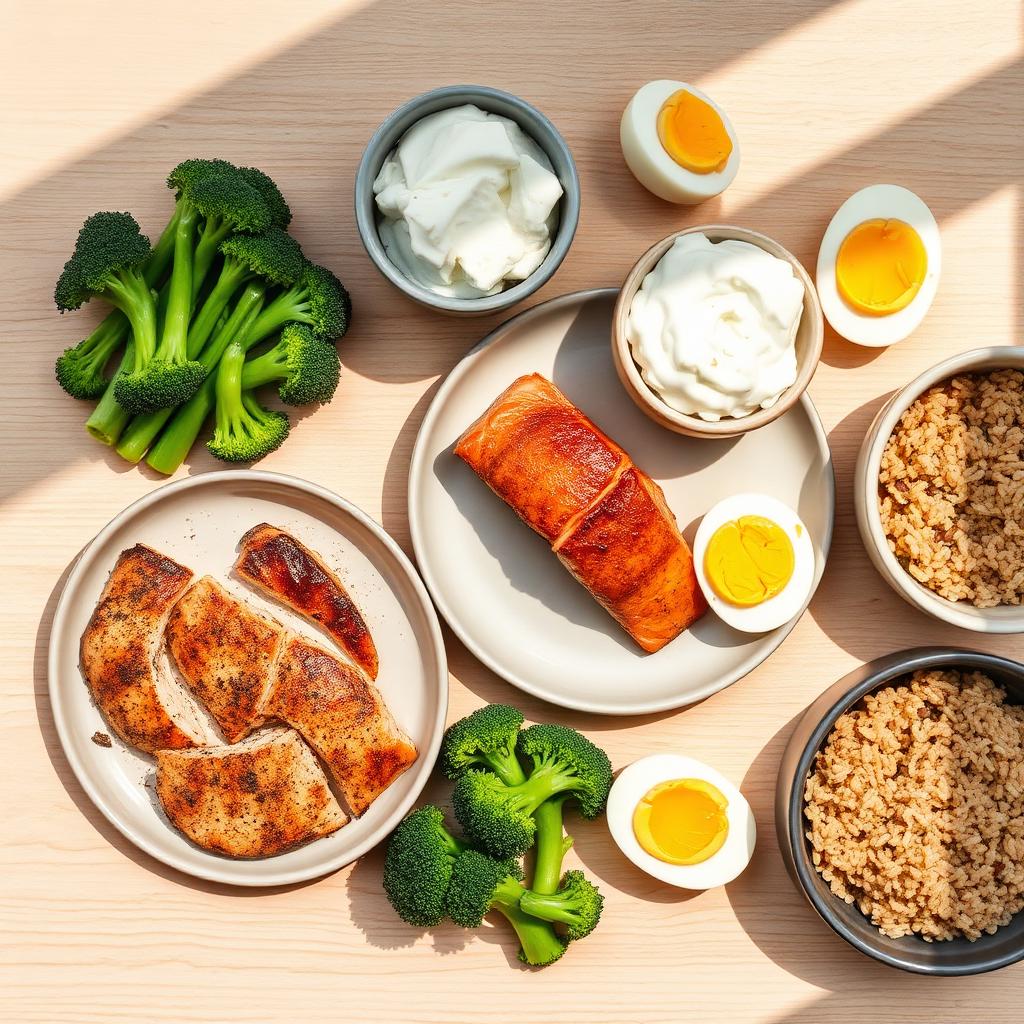
At every meal, aim for one lean protein source (a palm-sized portion of chicken, fish, eggs, tofu, or a cup of Greek yogurt or cottage cheese), roughly half a plate of vegetables, and a fist-sized portion of a carb like rice, potatoes, or oats. Add a little healthy fat. That template alone typically delivers 30–40g of protein per meal — more than enough to reach a high protein target across the day.
FAQ
What percent of calories is a high protein diet?
Roughly 25%–35% of daily calories from protein is generally considered high. The standard reference range for adults tops out around 20%, so anything meaningfully above that qualifies.
Is high protein the same as low carb?
No. A high protein diet only defines protein intake — carbs and fats can be moderate, low, or high depending on how the rest of the plate is built.
Who benefits most from a high protein diet?
People trying to lose fat while keeping muscle, people doing regular strength training, and older adults trying to protect lean mass tend to benefit most.
Build your own plan: Use the NutriPlan meal planner and select the High Protein diet to auto-generate a personalized 7-day plan with your exact calorie and macro targets.