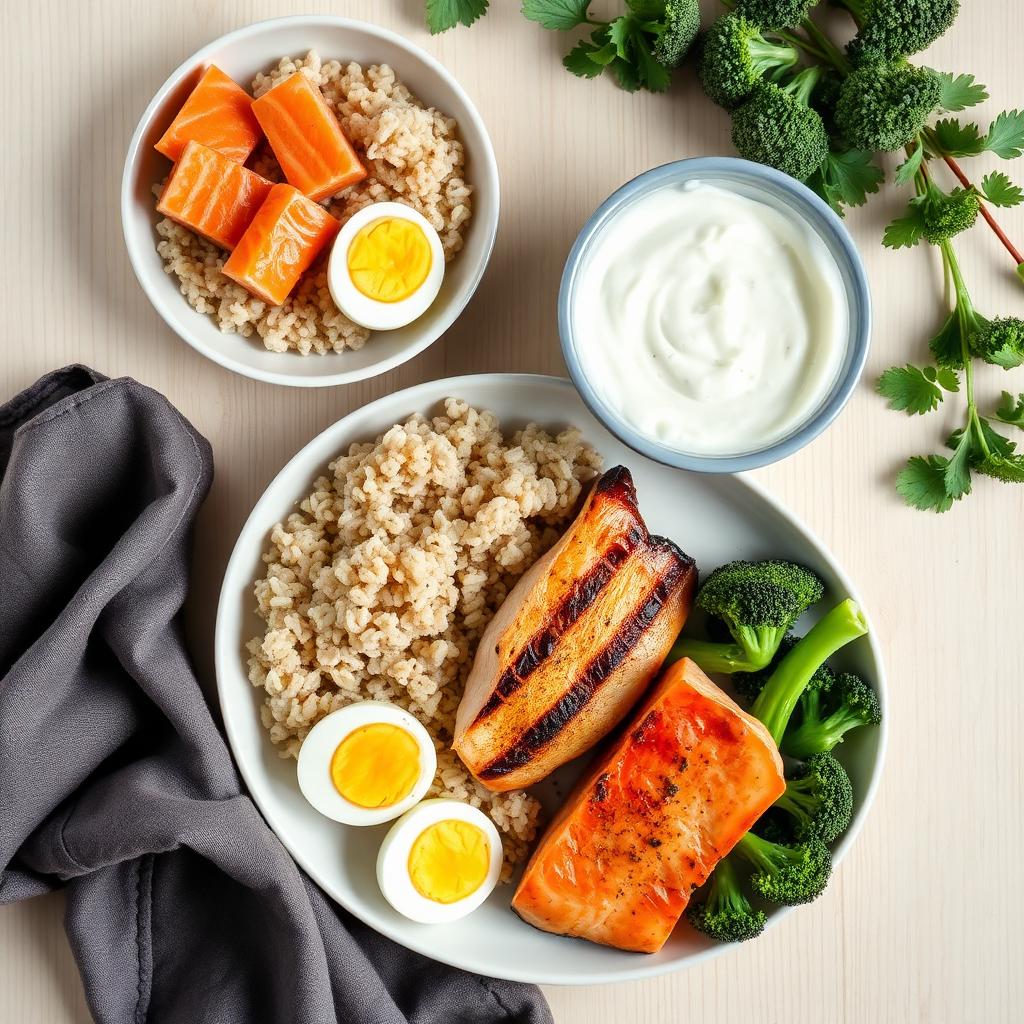
A high protein diet is one of the most effective, sustainable ways to lose fat without feeling starved. Protein keeps you full, protects lean muscle in a calorie deficit, and takes more energy to digest than carbs or fats. This guide breaks down what "high protein" actually means, how much you need, and gives you a simple 7-day meal plan you can adapt to your own calorie target.
What Counts as a High Protein Diet?
For most healthy adults, a high protein diet means eating roughly 1.6–2.2 g of protein per kg of body weight per day (about 0.7–1.0 g per pound). In calorie terms, that usually lands between 30% and 40% of your daily intake. See what actually counts as high protein for the full definition, and how these gram targets were calculated for a per-body-weight breakdown.
Why High Protein Works for Weight Loss
- More fullness per calorie: protein triggers satiety hormones so you eat less naturally.
- Muscle protection: in a deficit, adequate protein helps you lose fat instead of muscle.
- Higher thermic effect: your body burns 20–30% of protein calories just digesting it.
- Steadier energy: protein blunts blood sugar swings, reducing crashes and cravings.
Building a High Protein Plate
A simple rule: at every meal, fill roughly a quarter of your plate with a lean protein, a quarter with a smart carb, and half with vegetables, plus a small amount of healthy fat. Good high-protein staples include chicken breast, turkey, lean beef, eggs and egg whites, Greek yogurt, cottage cheese, salmon, tuna, shrimp, tofu, tempeh, edamame, lentils, and whey or plant-based protein powder.
7-Day High Protein Meal Plan (≈1,800 kcal, ~150 g Protein)
Use this as a template. If your target is higher or lower, scale portions up or down — or drop your numbers into the NutriPlan meal planner to auto-adjust everything. Not sure what your daily calorie number should be? Start with how many calories should I eat.
Day 1
- Breakfast: Greek yogurt bowl — 200 g nonfat Greek yogurt, 30 g granola, 100 g berries.
- Lunch: Grilled chicken salad — 150 g chicken breast, mixed greens, 1 tbsp olive oil, 1/2 avocado.
- Snack: 1 scoop whey protein + 1 apple.
- Dinner: Baked salmon (150 g) with 150 g roasted sweet potato and broccoli.
Day 2
- Breakfast: 3-egg omelet with spinach and feta, 1 slice whole-grain toast.
- Lunch: Turkey wrap — 120 g turkey breast, whole-wheat tortilla, hummus, veggies.
- Snack: 150 g cottage cheese + 100 g pineapple.
- Dinner: Lean beef stir-fry (150 g) with mixed peppers and 120 g jasmine rice.
Day 3
- Breakfast: Protein oats — 50 g oats cooked with milk, 1 scoop whey, banana.
- Lunch: Tuna and quinoa bowl — 1 can tuna, 100 g cooked quinoa, cucumber, olive oil.
- Snack: Hard-boiled eggs (2) + baby carrots.
- Dinner: Grilled chicken thighs (160 g) with roasted cauliflower and 100 g potatoes.
Day 4
- Breakfast: Cottage cheese pancakes — 150 g cottage cheese, 2 eggs, 40 g oats, berries.
- Lunch: Shrimp rice bowl — 150 g shrimp, 120 g brown rice, edamame, sesame.
- Snack: Greek yogurt (150 g) + 20 g almonds.
- Dinner: Turkey meatballs (150 g) with zucchini noodles and marinara.
Day 5
- Breakfast: Smoothie — 1 scoop whey, 200 ml milk, banana, 1 tbsp peanut butter, spinach.
- Lunch: Chicken burrito bowl — 150 g chicken, 100 g black beans, salsa, greens.
- Snack: 1 string cheese + 1 pear.
- Dinner: Baked cod (170 g) with lentils (120 g cooked) and roasted zucchini.
Day 6
- Breakfast: Egg white scramble — 6 egg whites + 1 whole egg, turkey bacon, tomato.
- Lunch: Tofu poke bowl — 150 g tofu, 100 g rice, edamame, cucumber, soy-ginger.
- Snack: Skyr (170 g) + 15 g walnuts.
- Dinner: Lean sirloin (150 g) with baked potato (150 g) and green beans.
Day 7
- Breakfast: Overnight oats — 50 g oats, 200 g Greek yogurt, chia seeds, berries.
- Lunch: Chicken and chickpea salad — 130 g chicken, 100 g chickpeas, greens, vinaigrette.
- Snack: Protein shake + rice cake with peanut butter.
- Dinner: Grilled shrimp tacos — 150 g shrimp, 2 corn tortillas, slaw, avocado.
Tips to Make It Stick
- Prep 2–3 protein sources in bulk on one day (chicken, hard-boiled eggs, ground turkey).
- Keep a "safety snack" like Greek yogurt or a protein shake on hand for busy days.
- Rotate carbs (rice, potatoes, oats, quinoa) and vegetables to avoid flavor fatigue.
- Drink water consistently — protein needs more fluid to metabolize.
The Bottom Line
A high protein meal plan isn't a magic trick — it's a smart structure that makes a calorie deficit far easier to live with. Prioritize a lean protein at every meal, keep portions realistic, and adjust the numbers to your own body and goals. If extreme hunger keeps derailing you, our guide to losing weight without starving yourself covers the mindset and habit side.
Build your own plan: Use the NutriPlan meal planner and select the High Protein diet to auto-generate a personalized 7-day plan with your exact calorie and macro targets.