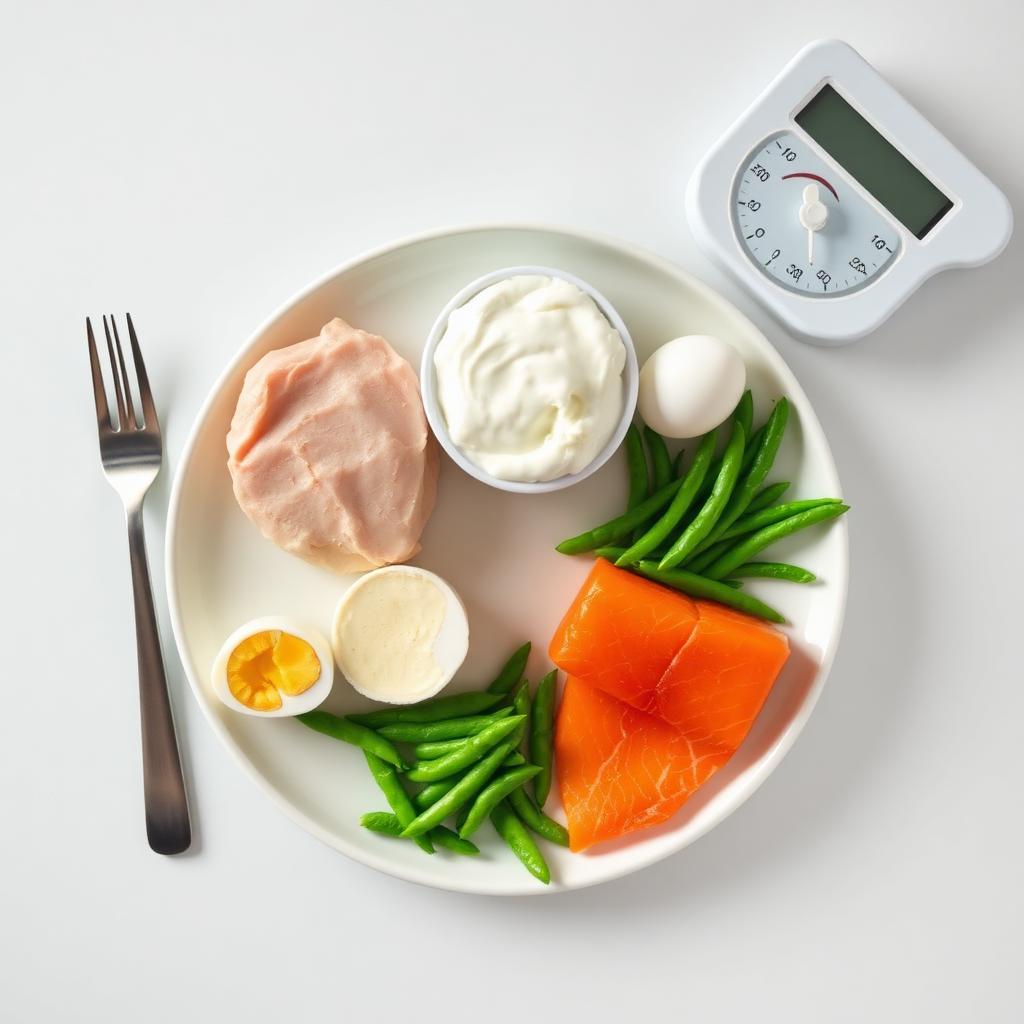
Quick answer: For most adults, a high-protein diet works out to roughly 100–160 grams of protein per day, based on eating 1.2–2.0g of protein per kilogram of body weight (about 0.55–0.9g per pound). The exact number depends on your body weight, activity level, and goals — there's no single gram target that applies to everyone.
Below is a breakdown by body weight so you can find a number that's actually relevant to you, rather than a generic figure that assumes everyone eats the same amount.
Protein Calculator
Estimate your daily protein target from your weight and goal.
Common range for lifters holding or slowly gaining muscle. Estimates only — not medical advice.
Grams of Protein by Body Weight
This table uses the 1.2–2.0g per kg range (roughly 0.55–0.9g per lb), which is the range most commonly cited for a high-protein diet.
| Body Weight | Low End (1.2g/kg) | High End (2.0g/kg) |
|---|---|---|
| 120 lb (54 kg) | 65g | 109g |
| 140 lb (64 kg) | 76g | 127g |
| 160 lb (73 kg) | 87g | 145g |
| 180 lb (82 kg) | 98g | 164g |
| 200 lb (91 kg) | 109g | 182g |
| 220 lb (100 kg) | 120g | 200g |
If you're newer to tracking protein, aim for the low end of the range and adjust upward over a few weeks rather than jumping straight to the top of it.
Where You Should Land in That Range
The low end (1.2g/kg) and high end (2.0g/kg) serve different goals:
- Closer to 1.2g/kg — a reasonable starting point for someone who's generally active but not doing structured strength training.
- 1.4–1.6g/kg — a common target for people doing regular resistance training who want to support muscle maintenance and recovery.
- 1.6–2.0g/kg — typical for people actively building muscle, or dieting in a calorie deficit, where higher protein helps preserve lean mass.
- Above 2.0g/kg — rarely necessary; research doesn't show consistent additional benefit beyond this point for most people, even in serious training contexts.
Grams Per Meal, Not Just Per Day
A daily gram target is easier to hit when you break it into per-meal targets instead of trying to hit it all at dinner. For a 130g/day target, that might look like:
- Breakfast: 25–30g
- Lunch: 35–40g
- Dinner: 35–40g
- Snack: 15–20g
Spreading protein across meals like this also tends to be more effective for muscle protein synthesis than front- or back-loading it into one large meal.
What Common Foods Contribute (Approximate)
- 1 large egg — 6g
- 6 oz chicken breast — 48g
- 1 cup Greek yogurt — 20–24g
- 1 cup cottage cheese — 24–28g
- 1 scoop whey or plant protein powder — 20–25g
- 6 oz salmon — 40g
- 1 cup cooked lentils — 18g
- 1 cup edamame — 17g
Stacking two or three of these per meal is usually enough to hit a 30–40g per-meal target without needing to eat unrealistic portions.
A Word on Going Too High
More protein isn't automatically better past a certain point. Once you're consistently above ~2.0–2.2g/kg, additional protein tends to just get used for energy rather than providing extra benefit for muscle or satiety — meaning very high intakes mostly just displace calories that could go toward carbs or fat without much added upside.
For people with healthy kidney function, high protein intake within this range is generally considered safe, but anyone with an existing kidney condition should talk to a doctor before significantly increasing protein intake.
FAQ
Is 150g of protein a day a lot?
For someone around 150–190 lbs, 150g sits comfortably in the high-protein range (roughly 1.7–2.2g/kg). For someone significantly lighter, it may be on the very high end or slightly above what's typically necessary.
How many grams of protein per meal is considered high?
Somewhere around 30–40g per meal is generally enough to maximize the muscle-building response from that meal — eating more than that in one sitting doesn't appear to provide much additional benefit.
Do bigger people need more protein?
Yes — protein needs scale with body weight (or more precisely, lean body mass), which is why gram targets are given per kilogram or pound rather than as one flat number for everyone.
Curious about the definition behind these numbers? How high protein is defined in the first place covers the reference ranges these targets come from. And to see what this looks like as real meals, the 7-day meal plan lays out a full week with grams per serving.
Build your own plan: Use the NutriPlan meal planner and select the High Protein diet to auto-generate a personalized 7-day plan with your exact calorie and macro targets.