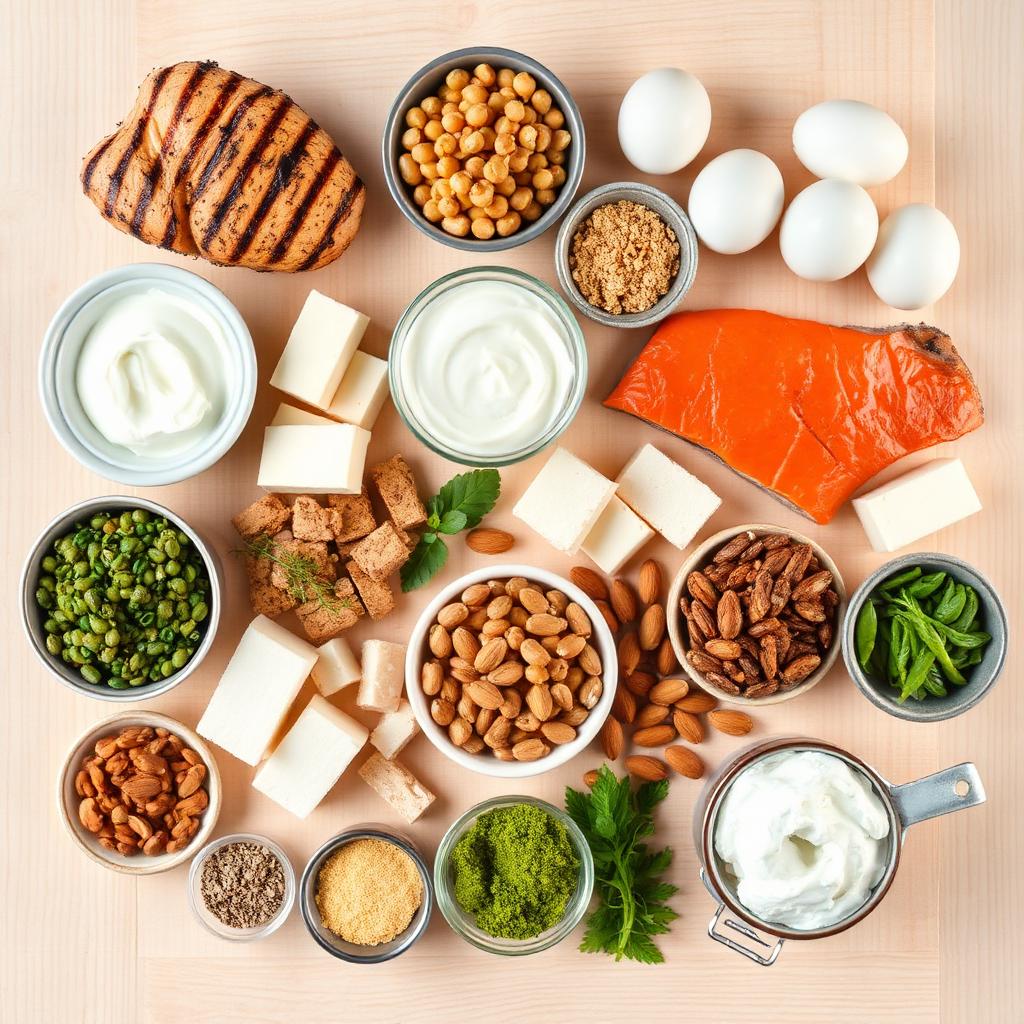
Not all "high protein foods" are equal — a food that's 90% protein by weight and one that's 9% protein by weight can both show up on a generic list, even though one delivers ten times more protein per bite. This list ranks 50 common foods by grams of protein per 100g, so you can see which foods actually pack the most protein relative to their size, not just which ones are commonly labeled "high protein."
Values below are approximate, based on standard USDA reference data for cooked or prepared forms unless noted, and will vary slightly by brand, cut, and preparation method.
The 10 Most Protein-Dense Foods Overall
| Rank | Food | Protein per 100g |
|---|---|---|
| 1 | Whey protein isolate (powder) | ~90g |
| 2 | Collagen peptides (powder) | ~90g |
| 3 | Whey protein concentrate (powder) | ~80g |
| 4 | Pea protein powder | ~80g |
| 5 | Soy protein powder | ~78g |
| 6 | Spirulina, dried | ~57g |
| 7 | Nutritional yeast | ~50g |
| 8 | Parmesan cheese | ~38g |
| 9 | Hemp seeds | ~31g |
| 10 | Chicken breast, cooked | ~31g |
Powders and dehydrated foods naturally top this list because removing water concentrates everything else, protein included. That doesn't make them "better" than whole foods — it just means the comparison isn't apples to apples. For whole-food, non-powdered options, skip to the category breakdowns below.
Protein Powders & Supplements
| Food | Protein per 100g |
|---|---|
| Whey protein isolate | ~90g |
| Collagen peptides | ~90g |
| Whey protein concentrate | ~80g |
| Pea protein powder | ~80g |
| Soy protein powder | ~78g |
Dense Extras
| Food | Protein per 100g |
|---|---|
| Spirulina, dried | ~57g |
| Nutritional yeast | ~50g |
| Textured vegetable protein (TVP), dry | ~52g |
Meat & Poultry
| Food | Protein per 100g (cooked) |
|---|---|
| Chicken breast | ~31g |
| Venison | ~30g |
| Turkey breast | ~29g |
| Lean beef (sirloin) | ~29g |
| Bison | ~28g |
| Ground turkey (93% lean) | ~27g |
| Pork tenderloin | ~26g |
| Chicken thigh | ~26g |
| Lamb | ~25g |
| Duck breast | ~24g |
Fish & Seafood
| Food | Protein per 100g (cooked) |
|---|---|
| Anchovies, canned | ~29g |
| Halibut | ~27g |
| Tuna, canned in water | ~26g |
| Tilapia | ~26g |
| Salmon | ~25g |
| Sardines, canned | ~25g |
| Shrimp | ~24g |
| Cod | ~23g |
| Scallops | ~20g |
| Crab | ~19g |
Eggs & Dairy
| Food | Protein per 100g |
|---|---|
| Parmesan cheese | ~38g |
| Cheddar cheese | ~25g |
| Mozzarella, part-skim | ~22g |
| Whole eggs | ~13g |
| Cottage cheese, low-fat | ~11g |
| Skyr (Icelandic yogurt) | ~11g |
| Egg whites | ~11g |
| Greek yogurt, nonfat | ~10g |
Plant-Based Proteins
| Food | Protein per 100g |
|---|---|
| Peanuts | ~26g |
| Seitan | ~25g |
| Tempeh | ~19g |
| Tofu, extra firm | ~17g |
| Edamame | ~11g |
| Lentils, cooked | ~9g |
| Chickpeas, cooked | ~9g |
| Black beans, cooked | ~9g |
| Quinoa, cooked | ~4g |
Nuts & Seeds
| Food | Protein per 100g |
|---|---|
| Hemp seeds | ~31g |
| Almonds | ~21g |
| Sunflower seeds | ~21g |
| Pumpkin seeds | ~19g |
| Chia seeds | ~17g |
Why "Protein Density" Matters More Than the Label
A lot of "high protein food" lists just group anything with a decent protein number, regardless of how much of that food you'd realistically eat in one sitting. Protein density fixes that by putting everything on the same scale (per 100g), so you can actually compare a food you'd eat 200g of (like chicken) against one you'd only use a tablespoon of (like nutritional yeast) on equal footing — even though the tablespoon might contribute more protein than expected for its size.
This matters most when you're trying to hit a daily protein target without eating huge volumes of food. Swapping lower-density staples (like rice or bread) for higher-density ones (like Greek yogurt or lean meat) is one of the easiest ways to raise total protein without eating significantly more food overall.
FAQ
What is the single highest protein food?
Among whole foods (excluding powders and dehydrated supplements), Parmesan cheese and chicken breast are among the most protein-dense common options, both landing in the 30–38g per 100g range.
Are protein powders "cheating" compared to whole foods?
Not really — they're simply concentrated. A scoop of whey or pea protein is a legitimate, efficient way to hit a daily target, especially for people who struggle to eat enough whole-food protein in a day. Whole foods do offer additional nutrients (fiber, healthy fats, micronutrients) that powders generally don't.
What's the best high protein food for weight loss?
Lean, high-protein-density options that are also lower in calories — like egg whites, cottage cheese, white fish, and chicken breast — tend to work well for weight loss because they deliver a lot of protein per calorie, which helps with fullness on a reduced-calorie diet.
What's a good high protein food for vegetarians?
Tempeh, seitan, edamame, Greek yogurt, cottage cheese, and eggs are all strong options that combine good protein density with easy availability at most grocery stores.
Curious how to build these into an actual eating plan? Check out our 7-day high protein meal plan, or start with how much protein you should eat a day to figure out your personal target before shopping.
Build your own plan: Use the NutriPlan meal planner and select the High Protein diet to auto-generate a personalized 7-day plan with your exact calorie and macro targets.